Back To Blogs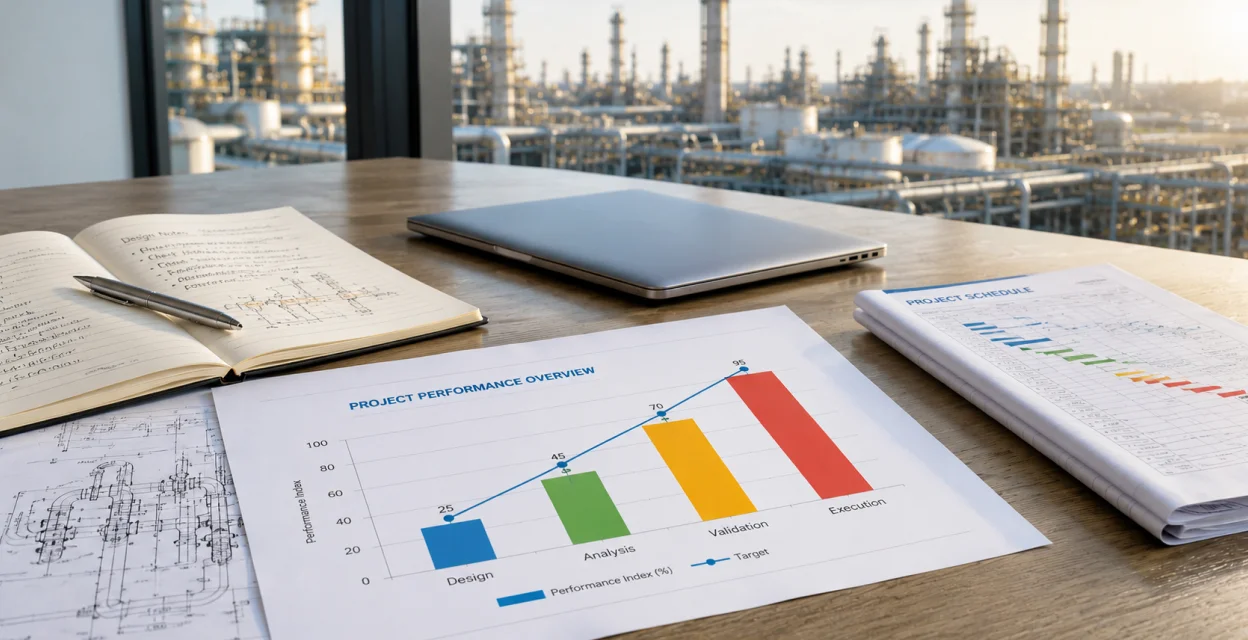
The Best Industrial Projects Are Engineered Long Before Execution Begins
Industrial success is rarely determined during commissioning.
It is determined much earlier.
Before operations start.
Before equipment is installed.
Before construction begins.
The strongest industrial organizations invest heavily in one capability that often remains invisible from the outside:
Advanced Engineering Methodologies.
Across Oil & Gas, Petrochemical, Refinery, Energy, Offshore, Water Treatment, and Process Industries, industrial leaders increasingly recognize that engineering methodologies directly influence performance, reliability, cost, scalability, and long-term operational outcomes.
Today, engineering is no longer about producing designs.
It is about creating certainty.
What Are Advanced Engineering Methodologies?
Engineering methodologies are structured approaches used to transform ideas into technically validated, executable industrial outcomes.
Modern engineering combines:
Design → Analysis → Simulation → Validation → Execution → Optimization
Instead of making decisions based on assumptions, engineering teams now use controlled technical processes to improve accuracy and reduce uncertainty.
Typical engineering functions involved include:
- Mechanical Engineering Services
- Hydraulic Engineering Services
- Electrical Engineering Services
- Instrumentation Engineering
- Process Engineering
- Design & Drafting Services
- Automation & Control Engineering
- System Integration Services
- Reverse Engineering Services
- Engineering Consultancy
The objective is clear:
Build confidence before execution begins.
Why Traditional Engineering Approaches No Longer Deliver Competitive Advantage
Industrial environments today demand:
- Faster execution
- Higher technical precision
- Better integration
- Lower operating cost
- Improved sustainability
- Greater operational reliability
Traditional engineering models often create:
- Rework
- Execution delays
- Design limitations
- Higher lifecycle costs
- Technical bottlenecks
Modern engineering methodologies solve these challenges through structured decision-making.
1. Better Design Decisions Create Better Industrial Outcomes
Every industrial project begins with engineering choices.
Design methodologies improve:
✔ Technical feasibility
✔ Capacity planning
✔ System compatibility
✔ Performance expectations
✔ Expandability
✔ Maintainability
Better engineering decisions reduce future operational challenges.
2. Simulation Reduces Engineering Uncertainty
Industrial projects become expensive when assumptions fail.
Simulation allows engineering teams to evaluate:
Simulation Areas
- Process behavior
- Equipment interaction
- Operational conditions
- Stress analysis
- Performance scenarios
- Failure possibilities
This enables industrial organizations to identify risks before implementation.
3. Engineering Validation Strengthens Project Predictability
Validation ensures engineering decisions can perform under real-world operating conditions.
Validation improves:
- Technical accuracy
- Process reliability
- System integration
- Performance readiness
- Safety alignment
Projects become more predictable and easier to execute.
4. Advanced Methodologies Improve Cross-Disciplinary Collaboration
Modern industrial systems require engineering coordination.
Engineering methodologies improve alignment between:
- Mechanical teams
- Process teams
- Electrical teams
- Instrumentation teams
- Automation specialists
- System integration teams
Connected engineering produces connected execution.
5. Engineering Optimization Improves Operational Performance
Optimization creates long-term business value.
Advanced engineering supports:
Optimization Outcomes
- Reduced energy consumption
- Higher production efficiency
- Better resource utilization
- Improved reliability
- Lower operating cost
Operational performance starts with engineering quality.
6. Methodology-Driven Execution Accelerates Delivery
Industrial delays often originate from poor technical coordination.
Engineering methodologies improve:
- Decision speed
- Approval cycles
- Documentation readiness
- Engineering visibility
- Execution confidence
Structured engineering reduces project friction.
7. Engineering Excellence Creates Sustainable Industrial Growth
Industrial leaders increasingly recognize that engineering is becoming an operational growth driver.
Organizations using advanced methodologies typically achieve:
✔ Higher reliability
✔ Better scalability
✔ Lower lifecycle cost
✔ Improved project outcomes
✔ Faster industrial transformation
Engineering is becoming the competitive advantage behind industrial leadership.
From Design to Performance: Engineering Creates the Difference
The future of industrial execution belongs to organizations that:
- Design intelligently
- Simulate accurately
- Validate thoroughly
- Execute confidently
- Operate efficiently
Engineering methodologies are no longer optional.
They are becoming the foundation of industrial success.
FAQs
- What are engineering methodologies?
Engineering methodologies are structured technical approaches used to improve planning, design, validation, execution, and operational performance. - Why are engineering simulations important?
Simulations help predict system behavior, identify risks, improve performance, and reduce execution uncertainty. - How do engineering methodologies reduce project risk?
They improve decision-making, validate technical assumptions, and strengthen execution readiness. - Which industries benefit most from advanced engineering?
Oil & Gas, Petrochemical, Refinery, Energy, Water Treatment, Offshore & Marine, and Process Industries. - Does engineering optimization improve operational efficiency?
Yes. Engineering optimization reduces waste, improves performance, and lowers operating costs. - Why is validation important in industrial engineering?
Validation confirms engineering decisions before execution and improves reliability. - How do engineering methodologies improve project delivery?
Structured methodologies reduce delays, improve coordination, and accelerate execution.
Why Petronash Engineering?
Engineering methodologies create value only when they translate into real industrial outcomes.
At Petronash Engineering, our focus extends beyond design delivery — we emphasize engineering discipline, technical validation, execution readiness, and long-term operational performance.
Why organizations work with Petronash Engineering:
✔ Structured engineering approaches that improve decision confidence
✔ Focus on technical validation and execution preparedness
✔ Engineering workflows designed to reduce uncertainty and improve outcomes
✔ Strong multidisciplinary coordination across complex industrial environments
✔ Methodology-driven execution that supports reliability and scalability
✔ Engineering engagement models aligned with industrial business goals
✔ Focus on optimizing industrial performance through smarter engineering
✔ Commitment to delivering practical and measurable engineering value
Ready to Engineer Better Industrial Outcomes?
Whether you are evaluating technical methodologies, improving project predictability, or preparing for large-scale industrial execution — our engineering team is ready to support your goals.
📩 Email: [email protected]
🌐 Website: www.petronashengineering.com
Connect with Petronash Engineering and explore how advanced engineering methodologies can improve performance, reduce uncertainty, and create stronger industrial outcomes.